 翻译数据库
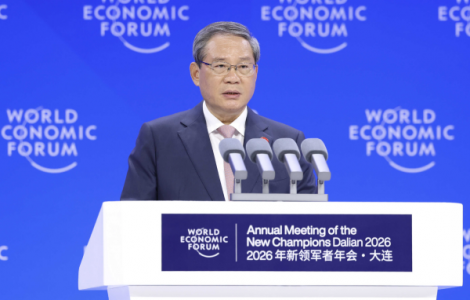
中英对照:李强在第十七届夏季达沃斯论坛开幕式上的致辞 [2]
Address by H.E. Li Qiang Premier of the State Council of the People's Republic of China at the Opening Plenary of the Annual Meeting of the New Champions 2026 [2]
四是“融”。在单边主义、保护主义抬头的情况下,中国坚持主动扩大对外开放,已对63个国家实施零关税政策,进口规模连续17年稳居全球第二,今年前5个月进口增速达到20.5%、明显高于出口。我们还举办了“出口中国”系列活动,为优质外国产品进入中国市场提供更多渠道,得到各国积极响应。中国与世界融合发展从来不是权宜之计,而是顺应历史潮流、根植于自身发展理念的战略之举。中国从来不追求独行之快,而是致力于同各国合作共赢、众行致远。
These four keywords—stability, innovation, dynamism, and integration—together present a comprehensive outlook of China's economy, sketching out both the current picture and future trajectory. We are confident and capable of sustaining and harnessing this strong momentum to keep writing new chapters in China's high-quality development.
综合来看,“稳、新、活、融”四个字勾勒出一幅多维图景,这既是中国经济当下的整体概貌,也是未来的总体态势。我们有信心有能力把这良好开局之势保持好、发展好,不断书写出中国高质量发展新的篇章。
II. Innovation-driven development is the key to China's long-term, steady and sustained economic success.
二、创新驱动是中国经济长期向好、行稳致远的关键密码
The fact that China's economy has maintained steady and healthy development over the years is attributed to two critical factors: the stable environment and the strength of innovation. The stable environment in China is widely recognized and many of you know this from personal experience, so I will not elaborate here. As for the strength of innovation, the visible outcomes and vibrant activities tend to attract more attention while the strenuous efforts and long-time dedication that contributed to the successes in innovation might not always be fully appreciated. In this connection, I wish to underscore three key messages.
多年来,中国经济之所以能够始终平稳健康发展,有两大要诀:一个是稳定的环境,一个是创新的驱动。对稳定的环境,大家都会有充分的认知和切身的感受,这里不再赘述。而对创新的驱动,可能大家平时更多关注到的,是已经呈现出来的创新成果和蓬勃态势,但对其背后的艰辛付出和长期坚守,大家不一定都充分了解。对此,我想择其要点讲三句话。
First, China's innovation has been forged through relentless, painstaking effort. We are well aware that there are no shortcuts in sci-tech research. No one can copy their way to an innovation edge. There has to be solid, hard work to tackle tough challenges. In recent years, in order to achieve greater self-reliance and strength in science and technology, we have steadily increased input into sci-tech research. During the 14th Five-Year Plan period from 2021 to 2025, our total R&D expenditure grew by an average of 10 percent annually, making China the world's second-largest R&D spender. Last year, basic research accounted for more than seven percent of total R&D expenditure, setting a new historical record for China. It is the same with Chinese enterprises, who have demonstrated unyielding resilience and steadfast dedication. Many industry leaders have endured operational pressures brought about by prolonged and costly R&D commitments. Some incurred heavy losses at certain stages, and others faced unfair external suppression. Yet none of them ever wavered in their commitment, and their perseverance has finally paid off. During the 15th Five-Year Plan period, we will further strengthen research on key technologies, significantly raise the proportion of basic research funding, and continuously enhance the capacity for original innovation. All this will provide an inexhaustible source of energy for the innovation-driven and high-quality development of China's economy.
第一句话,中国的创新是苦练内功“拼”出来的。我们深知,科技研发没有捷径可走,创新优势也不可能靠复制得来,必须脚踏实地克难攻关。这些年,我们着眼实现高水平科技自立自强,持续加大科研投入力度,“十四五”时期,全社会研发经费年均增长10%,投入规模稳居世界第二,其中基础研究经费比重去年超过7%、创历史新高。这一过程中,中国企业展现出百折不挠的坚韧和“十年磨一剑”的专注。很多行业内领先的企业,都经历过长周期、高投入研发带来的经营压力,有的面临阶段性巨额亏损,有的还遭遇外部不公正打压,但即便如此也从未动摇,最终才有了今天的回报。“十五五”时期,我们将继续加强关键技术攻关,显著提高基础研究经费投入占比,持续提升原始创新能力,为中国经济向新向优发展提供源源不断的动力。
Second, China's innovation has been tempered through extensive applications across industries. Science and technology thrives in application. The most difficult leap in innovation is often not the one inside the lab, but the one across the "Darwinian Sea" that separates the lab from the market. The key therefore lies in better connecting science and technology with industry. After years of pursuing innovation-driven development, China has blazed a successful path whereby sci-tech innovation spearheads industrial innovation and industrial upgrade propels sci-tech evolution. On the one hand, sci-tech progress is the wellspring of industrial development. In recent years, we have made active explorations in frontier and emerging sectors, and achieved a large volume of innovation outcomes that have given birth to many new industries. The vigorous growth of China's new energy and intelligent connected vehicle industries, for example, has been enabled by sci-tech breakthroughs in new materials, power batteries and communications technology. These innovations are the core competitiveness of Chinese products, not government subsidies as some have speculated. We cannot afford to give so many subsidies. On the other hand, China's massive application scenarios provide a powerful incubator and training ground for new technologies. China has a complete industrial system and a big market. A promising sci-tech outcome, backed by China's manufacturing strength, can be rapidly turned into real-world consumer goods. Likewise, a niche product, placed in a market of over 1.4 billion consumers, has the potential to grow into a sizable business and even a big industry. With broad participation across all sectors, frequent feedback from countless users, and repeated refinement across diverse scenarios, new technologies have been able to evolve and upgrade continuously through large-scale applications. Going forward, we will promote deeper integration between sci-tech innovation and industrial innovation, expand effective domestic demand, accelerate the large-scale application of new technologies and products, and strengthen the mutually reinforcing cycle of sci-tech advances and industrial development.
第二句话,中国的创新是千行百业“用”出来的。科技的生命力在于应用,很多时候创新需要跨越的最大关口不是实验室的发明,而是从实验室到市场的“达尔文之海”。如何实现科技和产业更好融合,是解决问题的关键所在。我们在长期的创新发展实践中,走出了一条以科技创新引领产业创新、以产业升级促进科技迭代的有效路径。一方面,科技进步为产业发展注入“源头活水”。近年来,我们聚焦前沿新兴领域积极探索,取得了一大批创新成果,催生了许多新的产业。中国新能源、智能网联汽车等产业蓬勃发展,背后正是新材料、动力电池、通信等科技突破。这才是中国产品竞争力的关键,而不是某些人猜测的主要靠政府补贴,我们也补不起。另一方面,海量的应用场景为新技术发展提供了强大“孵化器”和“练兵场”。中国有完备的产业体系和广阔的市场空间,任何一项有价值的科技成果在中国制造的加持下都能迅速变为实际产品,任何一个小众产品在14亿多人的大市场中都能变成大生意、大产业。正是千行百业共同参与、无数用户高频反馈、各类场景反复打磨,让新技术得以在规模化应用中不断迭代升级。下一步,我们将推进科技创新和产业创新深度融合,不断扩大国内有效需求,加快新技术新产品大规模应用,持续强化科技和产业相互促进的良性循环。
Third, China's innovation has been nurtured in an enabling environment. Innovation today is highly complex and systemic, requiring larger-scale resources input, stronger supporting measures, and a more enabling institutional environment. For years, China has worked hard to enhance its systemic innovation capacity and achieved remarkable results. We have been increasing support in resources and factors of production, putting in place a diversified investment system with enterprises leading the way, government providing guidance and society participating, building a batch of major sci-tech research facilities and infrastructure, and training some seven million university graduates in science, engineering, agriculture and medicine every year. We have prioritized building innovation platforms. Of the world's top 100 innovation clusters, 24 are in China, ranking first in the world for three consecutive years. Professional, differentiated and specialized industrial clusters spread across the country, from the one-hour electronic information innovation circle in the Yangtze River Delta, the one-hour motorcycle industrial circle in Chongqing, to the 30-minute supporting circle in Shenzhen's Robot Valley. These platforms have incubated a large number of high-tech enterprises as well as "little giants" that use specialized and sophisticated technologies to produce novel and unique products. Moreover, we have deepened reforms of systems and institutions, introducing a series of new policies and new measures in intellectual property rights protection, risk sharing, innovation incentives, etc. Going forward, we will continue to improve the innovation-friendly ecosystem and speed up the development of infrastructure including new-type power grids, computing power networks and new-generation telecommunication networks, so as to effectively remove barriers to better resource allocation and keep unlocking and unleashing the innovation dynamism of the whole society.
第三句话,中国的创新是厚植生态“育”出来的。当今时代,创新已经成为高度复杂的系统工程,需要更大规模的资源投入、更加有力的配套支撑、更为友好的制度环境。这些年,中国着力提升体系化创新能力,取得显著成效。我们不断加大资源要素保障,构建了企业主导、政府引导、社会参与的多元投入体系,建设了一批重大科研装置和科研基础设施,每年培养理工农医类大学毕业生约700万人。我们注重加强创新平台建设,打造了24个全球百强创新集群、连续三年居世界首位,专业化、差异化、特色化的产业集群遍布全国,从长三角电子信息1小时创新圈、到重庆摩托车1小时产业圈、再到深圳机器人谷半小时配套圈,孕育了大量的高新技术企业、专精特新“小巨人”企业。我们深入推进制度机制改革,在知识产权保护、风险分担、创新激励等方面推出一系列新政策新举措。未来我们将继续优化创新生态,加快建设新型电网、算力网、新一代通信网等基础设施,有效破除阻碍资源优化配置的壁垒障碍,不断激发、释放全社会创新活力。
China's rapidly growing innovation capacity has been widely welcomed and recognized by most in the world. Some, however, respond differently. They are anxious about China's sci-tech and industrial innovation, and for various reasons, even come up with so-called "China shock 2.0." But as I have noticed, in the recent discussions about this narrative by some institutions and media outlets, there are more mentioning of an opposite term, that is, "China opportunity 2.0." In the past, China's big market and low-cost production factors provided "market dividends" for the world. Today, while continuing to provide even greater "market dividends," China is also offering more and more "innovation dividends" with its technological progress and industrial upgrading. What these combined dividends generate for the world are greater opportunities and potential of development. For enterprises around the world, "China opportunity 2.0" means across-the-board innovation empowerment and high-return investment opportunities. As we have seen, a growing number of foreign enterprises have come to China to set up research centers and regional headquarters, and become deeply integrated into China's innovation and industrial chains. This is a clear shift from "made in China" to "created in China"—in 2025, 14,000 foreign-funded enterprises were established in the fields of scientific research and technological services, up by 27.2 percent year-on-year. Here in China, enterprises from various countries can quickly find whole-process partners from R&D to prototyping, and to mass production, making innovation easier and more efficient. This not only helps companies succeed in the Chinese market but also boosts their global competitiveness. At the same time, fast-growing Chinese innovative enterprises can also generate returns for investors across the world that could be several, or even dozens, times the original capital. For global development, "China opportunity 2.0" means more accessible advanced technologies and widely shared outcomes. China is committed to an open approach to innovation. Much of its innovation is open-source. This enables more countries, particularly developing countries, to access affordable new technologies and new products, which has enhanced their development capacity and can help address many difficulties holding back global development. Today, China's large open-source AI models have been downloaded by over 10 billion times globally in cumulative terms, large-scale scientific facilities in controlled nuclear fusion, quantum technology and other areas are open to the world, and the Tiangong space station is set to welcome foreign astronauts. These are proof enough that what China's technologies and products in emerging areas bring to the world are not shocks or threats, but opportunities and empowerment.
对于中国创新水平的快速提升,国际上总体给予了积极评价和广泛赞誉。然而也有一些人不这么看,他们对中国的科技和产业创新感到焦虑,甚至出于种种原因抛出了所谓“中国冲击2.0”的论调。我注意到,近期一些机构、媒体对此作了些讨论,但更多声音提到的是一个相反的词汇,那就是“中国机遇2.0”。如果说过去,中国主要是以自身的大规模市场、低成本要素为世界提供“市场红利”,那么现在,中国在提供更大“市场红利”的同时,还通过科技进步与产业升级,为全球提供越来越多的“创新红利”。这些红利交融叠加,给世界带来的是更多的发展机遇、更大的发展空间。对各国企业而言,“中国机遇2.0”意味着全方位的创新赋能、高收益的投资机会。我们看到,越来越多的外国企业来到中国,设立研发中心、地区总部,深度融入中国创新链、产业链,从“在中国生产”转向“在中国创造”,2025年科技研究和技术服务领域新设外资企业1.4万家、同比增长27.2%。在中国,各国企业能够快捷找到从研发、试制到量产的全流程合作伙伴,让创新变得更高效、更容易,不仅在中国市场获得成功,也提升了面向全球市场的竞争力。同时,高速成长的中国创新企业还能给各国投资者带来数倍甚至数十倍的回报。对全球发展而言,“中国机遇2.0”意味着更可及的先进技术、更普惠的成果共享。中国坚持开门搞创新,很多创新走的是开源路线,这让更多国家特别是发展中国家用得上、用得起新技术新产品,既提升了其发展能力,也能推动解决诸多全球性发展难题。现在中国人工智能开源大模型全球累计下载量已突破100亿次,可控核聚变、量子科技等大科学装置向全球开放,天宫空间站即将迎来外国宇航员。事实有力证明,中国的新兴领域技术和产品,带给世界的不是冲击而是机遇,不是威胁而是赋能。
III. Innovation cooperation is an imperative for tackling global growth predicament.
三、创新合作是破解全球增长困境的必然选择
Throughout China's development, innovation has played an irreplaceable and pivotal role. In the broader global economy, it stands as a vital pathway to counter downward pressure and reignite growth momentum. At present, global innovation activities have taken on new characteristics and trends unlike anything seen before. First, never before has technology advanced so fast, but the risk of uncontrollability is notably rising. AI has vastly enhanced innovation efficiency, with breakthroughs emerging on all frontiers. Some call this the "Cambrian moment" of the intelligent age, but the risks of losing control and ethical lapses are also mounting. Without commensurate governance, the fallout could be severe. Second, never before has innovation been so deeply interconnected, yet the barriers to collaboration are increasing. Collective efforts that cross disciplines and national borders have become the mainstream and necessity of innovation. Yet technological walls, barriers and blockades are also growing more pervasive. Innovation that truly transforms and benefits the world must always open up to and embrace the world. In this new landscape, only through stronger cooperation can we generate more breakthroughs, and only through stronger cooperation can we rise to the diverse risks and challenges before us.
纵观中国发展,创新发挥了不可替代的关键作用。放眼世界经济,创新也是对抗下行压力、提升增长动力的重要路径。现阶段,全球创新活动呈现出一些不同以往的新特点新趋势。其一,技术进步速度之快前所未有,同时不可控性也显著上升。人工智能大幅提升创新效率,各类前沿突破层出不穷,有人说人类已经步入智能时代的“寒武纪”,但技术失控、伦理失范等风险也更加突出,如果相关治理跟不上,就很可能导致严重后果。其二,创新联动程度之深前所未有,同时阻碍壁垒也日益增多。跨学科、跨国界的“集团作战”、合力攻坚日益成为创新的主流和需要,但各种形式的“筑墙设垒”、“科技封锁”也愈演愈烈。真正改变世界、惠及世界的创新,始终应该是走向世界、拥抱世界的创新。新形势下,唯有加强合作,才能多出创新成果;也唯有加强合作,才能应对各类风险挑战。
We should deepen connectivity and collaboration to build greater synergy for innovation. In this new round of technological revolution and industrial transformation, no country or company can succeed alone. An interconnected global market enables more efficient flow and allocation of production factors, and significantly reduces innovation costs. An inclusive and collaborative innovation network allows ideas to interact and converge more freely, accelerating breakthroughs in frontier technologies. China will integrate more proactively into the global innovation and industrial chains, work with all sides to build an open world economy, jointly safeguard stable and smooth global industrial and supply chains, foster more innovation outcomes, and strengthen the drivers of growth.
注:为确保中英对照准确,“热词译”网站可能对中英文重新分段。