 翻译数据库
翻译数据库中英对照:2026年6月3日外交部发言人毛宁主持例行记者会 [2]
Foreign Ministry Spokesperson Mao Ning’s Regular Press Conference on June 3, 2026 [2]
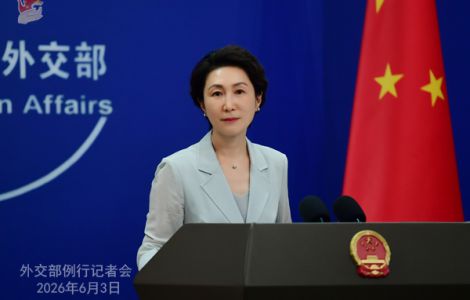
毛宁中方对当前局势深表关切。战事再起不符合任何一方利益,希望相关各方珍惜和平机会、履行停火承诺、保持谈判势头,坚持通过政治外交途径化解争端,尽早实现全面、持久停火,为恢复中东海湾地区和平安宁创造必要条件。
Mao Ning China is gravely concerned over the current situation. More fighting serves no one’s interests. We hope relevant parties will cherish the chance for peace, implement the ceasefire, keep the negotiation going, resolve disputes through political and diplomatic means, achieve a comprehensive and lasting ceasefire at an early date and create necessary conditions for restoring peace and tranquility in the Middle East and Gulf region.
湖北广电记者据多家非洲和台湾岛内媒体披露,赖清德窜访斯威士兰前后,民进党当局向该国投入总计约250亿元新台币资金,并承诺项目收益全部属于斯威士兰国王及王室,台驻斯代表等也将从中受益。发言人对此有何评论?
Hubei Media Group According to media in Africa and the Taiwan region, before and after Lai Ching-te’s visit to Eswatini, the DPP authorities provided the country with 25 billion or so New Taiwan dollars worth of funding, and pledged that the income of related project belongs entirely to the king and the royal family. Taiwan’s representatives in Eswatini will also profit from that. What’s your comment?
毛宁有关报道再次证明,赖清德当局为了谋求“台独”私利,通过“金元外交”搞腐败营私、利益输送和权钱交易,挥霍台湾民众的血汗钱,相当于让台湾民众每人上交了1千多元新台币。“台独”分裂势力与斯威士兰维系所谓“邦交”关系,目的不是惠及广大民众,而是为少数既得利益者“圈钱”,是充斥贪婪、腐败的“政治作秀”。
Mao Ning Those reports are yet another example of how far the Lai Ching-te authorities would go to selfishly advance their “Taiwan independence” agenda. Their expensive dollar diplomacy—a combination of corruption, fraudulence, bribery and money for abuse of power—has cost dearly the people in Taiwan, equivalent to collecting more than NT$1,000 from every person in Taiwan. Having Eswatini as a “diplomatic ally” is not about delivering real benefits for the people, but to line the pockets of the very few people who profit from it. This is political theatrics steeped in greed and graft.
一个中国原则是国际社会普遍共识,也是国际关系基本准则。今年中国对非洲建交国全面实施零关税,为非洲国家扩大对华出口、促进经济发展提供了新机遇,切实造福中非人民。斯威士兰是非洲大陆唯一的所谓台湾“邦交国”,与“台独”分裂势力捆绑没有前途,只会错失发展机遇,孤立于国际社会。
The one-China principle is a prevailing international consensus, and a basic norm governing international relations. This year, China has extended zero-tariff treatment to all 53 African countries having diplomatic relations with China. This is a fresh opportunity for African countries to expand exports to China and grow their economies. It has delivered tangible benefits to Chinese and Africans. Eswatini is the only country left in Africa with so-called “diplomatic ties” to Taiwan. Betting on “Taiwan independence” has no future. It will only cost them opportunities for development and lead to international isolation.
总台中国之声记者据报道,经济合作与发展组织发布报告称,在汽车、造船、太阳能等15个关键工业领域中,中国企业2005年以来全球市场近60%份额增长可归因于补贴。全球补贴总额2024年达1080亿美元,其中52%来自中国。该组织秘书长科尔曼称,大规模持续产业补贴扭曲全球市场,形成不公平竞争优势并导致产能过剩。中方对此有何评论?
CNR According to a report from the Organization for Economic Co-operation and Development, across 15 key industries including car manufacturing, shipbuilding and solar power, nearly 60 percent of the global market share gains by Chinese firms since 2005 can be linked to subsidies they received. The report finds that global subsidies amounted to USD 108 billion in 2024, 52 percent of which came from China. OECD Secretary-General Mathias Cormann stated that large and persistent industrial subsidies can distort global markets, creating unfair competitive advantages and contributing to excess supply capacity. What is your comment?
毛宁中国企业的竞争力不是补出来的,而是来自高度市场化竞争、持续的技术创新、企业的全球布局以及超大规模市场带来的规模经济优势。中国的产业补贴政策坚持开放、公平、合规原则,严格遵守世贸组织规则。从世界范围看,产业补贴政策是各国普遍采用的,关键是要符合世贸组织规则。希望有关国际组织发挥建设性作用,而不是相反。
Mao Ning Chinese firms make their way to the top not on subsidies, but through market competition, tireless innovation, global presence and the advantage of China’s mega-sized market. China’s industrial subsidy policy is based on openness, fairness, and compliance, and strictly within WTO rules. Industrial subsidies are commonly used worldwide. What matters is whether they comply with WTO rules. We hope the international organization will play a constructive role rather than the other way around.
路透社记者因301调查认定包括中国和中国香港在内的60个经济体未能禁止生产过程中的“强迫劳动”,特朗普政府计划对自这些经济体进口的产品额外征收10%或12.5%的关税。中方对此有何回应?(彭博社记者亦问及)
Reuters The Trump administration has proposed to impose additional duties of 10 percent or 12.5 percent on imports from 60 economies including China and Hong Kong after a Section 301 probe found failures to curb forced labor in the production process. What is China’s response to this? (Similar question from Bloomberg)
毛宁中方一贯反对各种形式的单边关税措施。关税战、贸易战不符合任何一方利益,经贸问题应该在平等、尊重、互惠基础上通过对话协商解决。中国不存在所谓“强迫劳动”,我们反对以此为借口搞政治操弄。
Mao Ning China opposes all forms of unilateral tariff measures. No one stands to gain from a tariff war or a trade war. Economic and trade issues should be worked out through dialogue and consultation on the basis of equality, respect and mutual benefit. There is no such thing as “forced labor” in China, and we oppose using it as a pretext for political manipulation.
新华社记者美国国务院发言人称,本届政府对言论自由有着坚定承诺,不接受中国对美国媒体持续缺乏对等待遇;中国长期以来对包括美国记者在内的在华外国记者施加多种限制。中方对此有何评论?
Xinhua News Agency Spokesperson of the U.S. State Department stated that the current U.S. administration has a firm commitment to free expression, and would not accept China’s continued lack of reciprocity in treating U.S. media. China has long imposed restrictions on U.S. journalists and other foreign journalists in China. What is your comment?
毛宁此前我的同事已就有关问题阐明立场。美方讲对等待遇,这正是中方的关切。中美媒体问题的始作俑者是美方。双方达成三项共识以来,中方完整落实,为美国记者来华采访报道提供签证等各方面便利。而中国驻美记者正常采访权利遭到严重限制,几乎没有中国记者获得白宫线下采访机会,签证、居留许可经常遭到无故拖延,多名记者被迫回国。中国记者申请赴美短期采访也很少获得批准。这难道是对等待遇吗?
Mao Ning My colleague has stated China’s position on relevant issues. The U.S. side mentioned the issue of “reciprocity”, but that is actually China’s concern. The United States is the one that caused the media issue. Since the two sides reached the three common understandings on this issue, China has implemented them in their entirety, and has facilitated U.S. journalists’ reporting in China in ways such as visa approvals, whereas Chinese journalists’ reporting right has been severely curbed. Hardly any Chinese journalists are allowed to raise questions at the White House briefings. Their applications for visa or residence permits are often delayed without explanation. Multiple journalists have been forced to return to China. Chinese journalists’ applications for short-term reporting rarely get approved. Is that what the U.S. side means by “reciprocity”?
注:为确保中英对照准确,“热词译”网站可能对中英文重新分段。